



Current issue
- Page Path
- HOME > Browse Articles > Current issue
- Volume 21 (2); August 2026
-


Review Articles
- Antibiotic Prophylaxis for Transrectal Prostate Biopsy
- Do Gyeong Lim, Seung Il Jung
- Urogenit Tract Infect 2026;21(2):47-55. Published online August 31, 2026
- DOI: https://doi.org/10.14777/uti.2652012.006
-
 Abstract
 PDF
PDF PubReader
 ePub
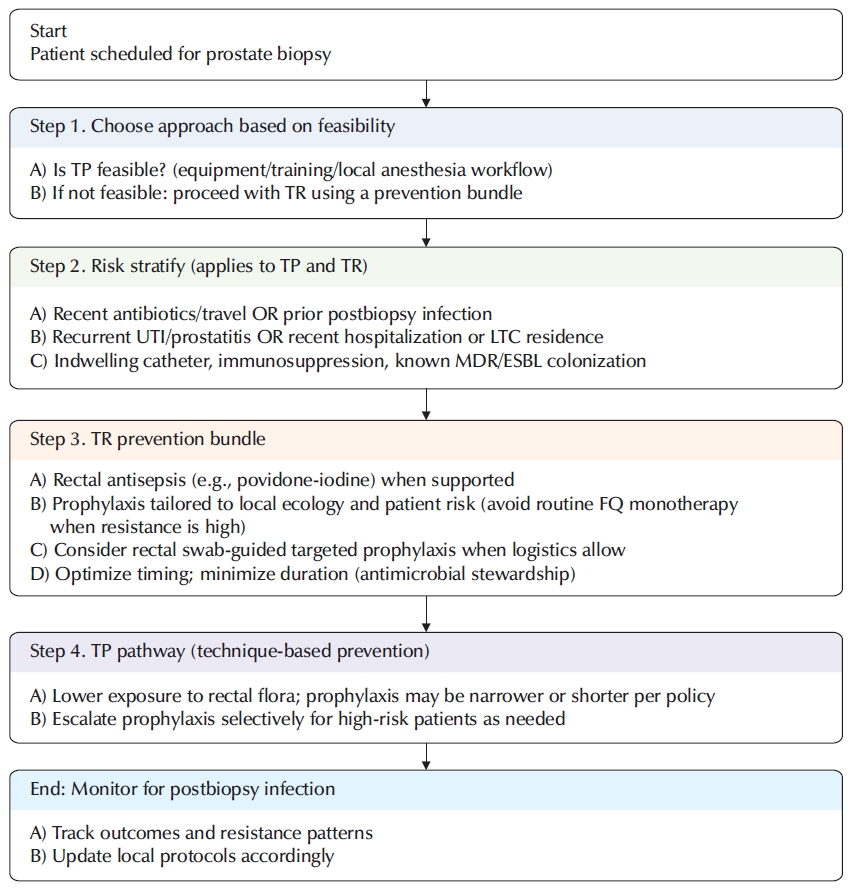
ePub - Transrectal prostate biopsy (TRPB) is widely used for the diagnosis of prostate cancer but carries a clinically meaningful risk of infectious complications due to inoculation and translocation of rectal flora into the urinary tract and bloodstream. Antibiotic prophylaxis remains central to preventing febrile urinary tract infection and sepsis; however, increasing antimicrobial resistance—particularly fluoroquinolone-resistant Enterobacterales—has reduced the reliability of conventional empirical regimens in many regions. In this narrative review, we searched PubMed/MEDLINE, Embase, and Scopus for relevant literature published through February 2026 and synthesized current guideline positions and selected clinical evidence on prophylactic regimens, resistance-adapted regimen selection, and adjunctive measures for TRPB. Cumulative evidence indicates that the efficacy of fluoroquinolone monotherapy has significantly declined in regions with high-resistance prevalence. Alternative or augmented strategies (e.g., cephalosporin- or fosfomycin-based approaches) may reduce infectious complications in selected settings, although their performance appears context-dependent and may be accompanied by shifts in pathogen distribution. Rectal swab-guided targeted prophylaxis can individualize antibiotic selection; however, its effectiveness varies across studies because of methodological heterogeneity and imperfect prediction of clinical outcomes. Technique-based prevention, most notably transperineal biopsy, may reduce infectious risk while decreasing reliance on broad-spectrum prophylaxis. Taken together, infection prevention after prostate biopsy should be individualized according to local susceptibility patterns and patient-level risk while integrating antimicrobial stewardship and selecting adjunctive or technique-based measures when feasible.
- 933 View
- 14 Download

- Human Papillomavirus-Related Diseases in Urology: Diagnosis, Treatment, Prevention, and Clinical Considerations for Healthcare Providers
- Kyu Won Lee, Amit Mani Upadhyay, Sangrak Bae
- Urogenit Tract Infect 2026;21(2):56-73. Published online August 31, 2026
- DOI: https://doi.org/10.14777/uti.2652020.010
-
Abstract
PDFPubReaderePub
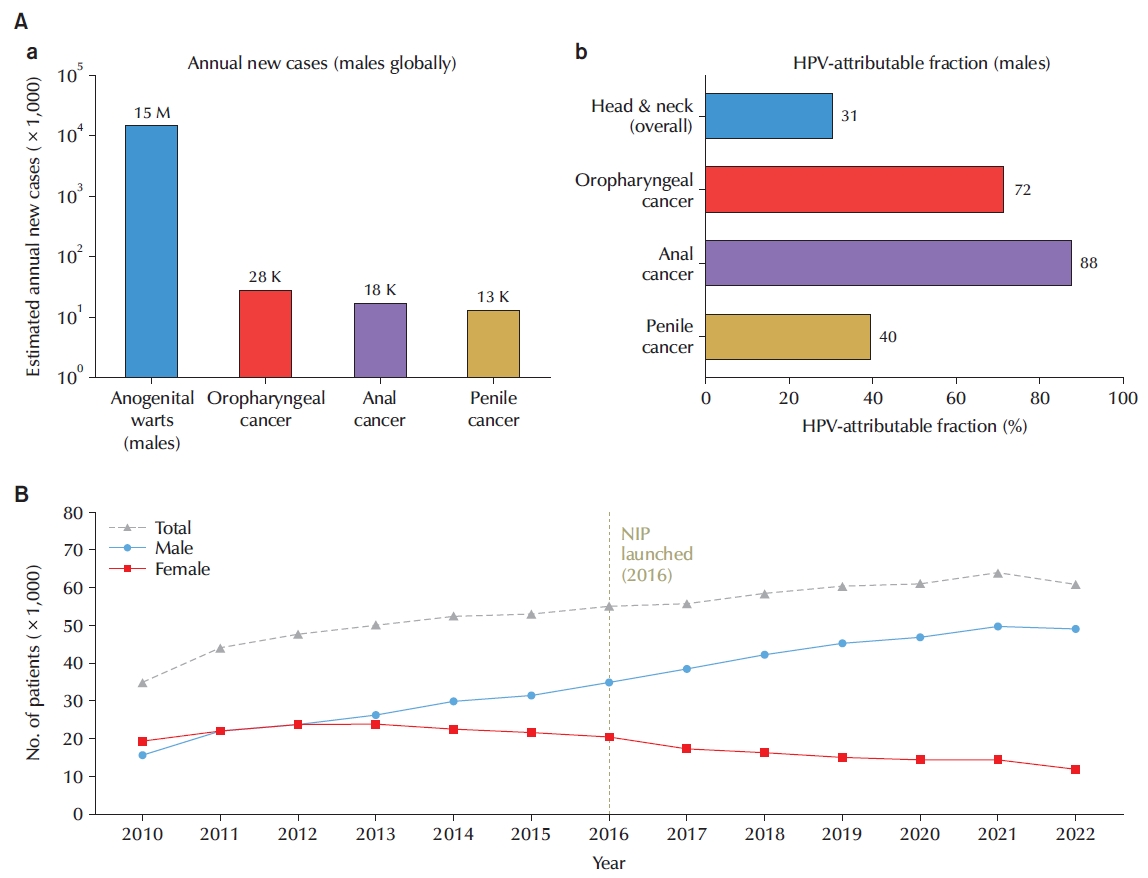
- Human papillomavirus (HPV) has long been regarded as a gynecologic pathogen, yet its disease burden in men is substantial and rapidly increasing. In Korea, the prevalence of anogenital warts in men has tripled over the past decade, penile cancer continues to rise, and HPV-positive oropharyngeal cancer (OPC) incidence in men has already exceeded that of cervical cancer in comparable high-income countries. This review reframes HPV as an urgent urological, occupational, and public health concern. Drawing primarily on the 2023 Korean Sexually Transmitted Infection (STI) Guidelines and the 2021 U.S. Centers for Disease Control and Prevention STI Treatment Guidelines, supplemented by original primary literature retrieved from PubMed, we address: (1) the male-specific epidemiological shift; (2) nonsexual and occupational transmission routes, with particular emphasis on surgical smoke; (3) evidence-based infection control in urology practice; (4) clinical management of anogenital warts; (5) male HPV vaccination policy, international comparisons, and cost-effectiveness; and (6) future research priorities including OPC prevention, HPV and male infertility, and the need for urology-specific infection control guidelines. From 2026, Korea will include 12-year-old boys in its National Immunization Program—the first gender-neutral HPV vaccination policy in Korea. This review highlights the expanding and indispensable role of urologists in HPV management and emphasizes that infection control vigilance and gender-neutral vaccination strategies are essential to reduce the mounting societal burden of HPV-related diseases. This review provides a practical framework for urologists to integrate HPV prevention, infection control, and vaccination counseling into routine clinical practice.
- 1,085 View
- 52 Download
Original Articles
- Clinical and Environmental Reservoirs of Pseudomonas aeruginosa in Rural Tanzania: Implications for Diagnostics and Antimicrobial Stewardship
- Philbert Balichene Madoshi, Theresia A. Karuhanga, Sandra Breum Andersen
- Urogenit Tract Infect 2026;21(2):74-88. Published online August 31, 2026
- DOI: https://doi.org/10.14777/uti.2550050025
-
Abstract
PDFPubReaderePub
- Purpose
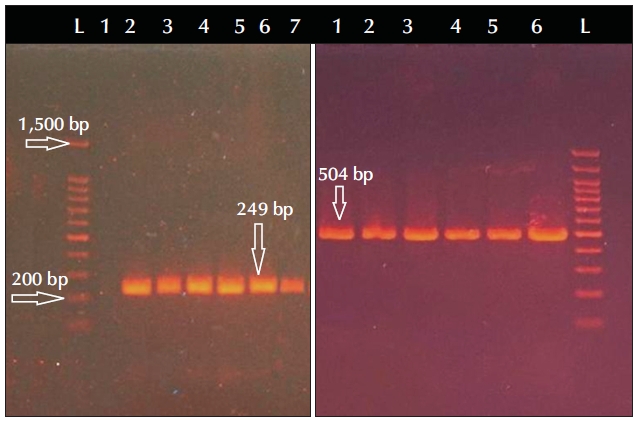
Antimicrobial resistance (AMR) is making urinary tract infections (UTIs) and surgical site infections (SSIs) increasingly difficult to treat, especially in low-resource settings where self-medication and limited laboratory services are common. This study explored knowledge and practices related to AMR and investigated Pseudomonas aeruginosa from clinical and environmental reservoirs in Kilombero, rural Tanzania. Materials and Methods: A cross-sectional study was conducted over 9 months at St. Francis Regional Referral Hospital and selected community markets. Questionnaires were used to assess AMR awareness and antibiotic-use practices among community members and healthcare providers. Urine samples from pregnant women, SSI swabs, and fresh fish samples were collected. Fish were included as indicators of environmental reservoirs and possible foodborne exposure to P. aeruginosa. Presumptive isolates were confirmed using polymerase chain reaction targeting the OprI and OprL genes. Antimicrobial susceptibility testing followed EUCAST (European Committee on Antimicrobial Susceptibility Testing) 2021 guidelines.
Results
Only 34% of community participants correctly identified bacteria as causes of infection, while 19% had no knowledge of bacterial infections or AMR. Ciprofloxacin was the most commonly used antibiotic (49%), and self-diagnosis was frequently reported (35%), particularly among fish vendors. Poor hygiene practices, including hand-washing without soap, were also common. A total of 271 P. aeruginosa isolates were confirmed. Gentamicin showed the highest effectiveness across all sample sources, while resistance to meropenem and ciprofloxacin was substantial, especially among fish and SSI isolates.
Conclusions
Knowledge gaps, self-medication, and inconsistent hygiene coexist with the presence of P. aeruginosa in both clinical samples and fish representing environmental reservoirs Tanzania. Improved diagnostics, antimicrobial stewardship, hygiene practices, and community education are needed to strengthen AMR control using a One Health approach.
- 560 View
- 4 Download
- Role of Presepsin as a Predictive Factor for Sepsis in Patients With Urinary Tract Infection Associated With Ureteral Calculi: A Retrospective Cohort Study
- Jong Gyun Ha, Hee Chang Jung, Yeong Uk Kim
- Urogenit Tract Infect 2026;21(2):89-95. Published online August 31, 2026
- DOI: https://doi.org/10.14777/uti.2652014.007
-
Abstract
PDFPubReaderePub
- Purpose
Recently, multiple studies have reported presepsin as a useful inflammatory biomarker for early sepsis diagnosis in patients with urinary tract infections (UTIs). Nonetheless, few studies have evaluated the efficacy of presepsin in urosepsis associated with ureteral calculi. We retrospectively investigated the efficacy of presepsin for early urosepsis diagnosis associated with ureteral calculi. Materials and Methods: Between May 2021 and July 2023, 64 patients with UTI associated with ureteral calculi were included. Sepsis was defined as a Sequential Organ Failure Assessment (SOFA) score increase of ≥2 points. Patients were divided into 2 groups, with (n=38) and without (n=26) sepsis, and we assessed clinical characteristics (age, sex, and past medical history), laboratory data, and stone characteristics. Additionally, we evaluated predictive factors for urosepsis associated with ureteral calculi and compared these factors with inflammatory biomarkers.
Results
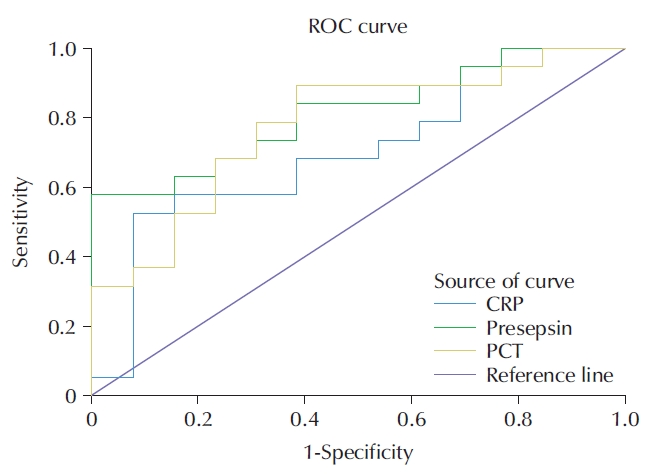
The proportion of females in the sepsis and nonsepsis groups was 89.5% (n=34) and 61.5% (n=16), respectively. In univariable analysis, low albumin level, low platelet count, and presepsin and procalcitonin (PCT) levels correlated with sepsis (p<0.05). In univariable logistic regression analysis, quick SOFA (odds ratio [OR], 2.071; p=0.033), C-reactive protein (CRP; OR, 1.08; p=0.01), PCT (OR, 1.025; p=0.008), and presepsin (OR, 1.354; p=0.001) were significantly associated with sepsis. In multivariate logistic regression analysis, presepsin (OR, 1.321; p=0.003) was significantly associated with sepsis. In receiver operating characteristic curve analysis of inflammatory markers, the areas under the curve for CRP, PCT, and presepsin were 0.704, 0.777, and 0.814, respectively.
Conclusions
Elevated presepsin levels may help predict sepsis occurrence in patients with UTI associated with ureteral calculi, thereby supporting timely and appropriate intervention.
- 567 View
- 6 Download
- Prevalence and Epidemiologic Characteristics of Acute Cystitis, Acute Pyelonephritis and Urinary Tract Infection: Population-Based Analysis Using Health Insurance Review and Assessment Service Bigdata From 2010 to 2024
- Don Hee Lyu, Jae Chul Lee, Chang Hee Han, Sangrak Bae
- Urogenit Tract Infect 2026;21(2):96-110. Published online August 31, 2026
- DOI: https://doi.org/10.14777/uti.2652006.003
-
Abstract
PDFPubReaderePub
- Purpose
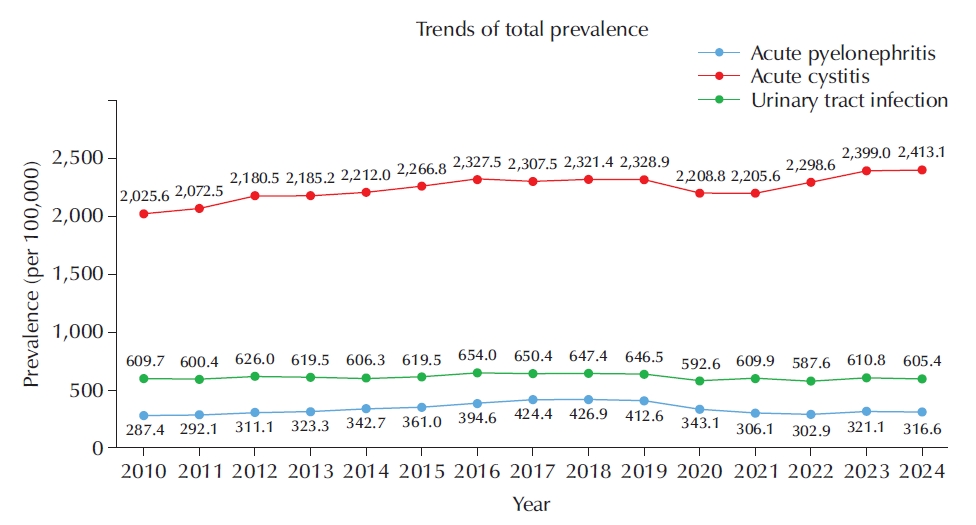
This study aims to investigate the long-term prevalence trends and epidemiological characteristics of acute pyelonephritis (APN), acute cystitis (AC), and other urinary tract infections (UTIs) in South Korea using nationwide big data. Materials and Methods: Data for ICD-10 (International Classification of Diseases, Tenth Revision) codes N10.0 (APN), N30.0 (AC), and N39.0 (UTI) were extracted from the Health Insurance Review and Assessment Service database from 2010 to 2024. Annual prevalence per 100,000 persons, sex and age-specific distribution, regional variations, and hospitalization/outpatient patterns were analyzed.
Results
The average annual prevalence per 100,000 was 344.4 for APN, 2,250.2 for AC, and 619.1 for UTI. AC reached its highest prevalence in 2024, despite a temporary decline in 2020. All conditions were more prevalent in females, with AC showing the highest male-to-female ratio of 1:20.4. A sharp 3.06-fold increase in APN prevalence was observed in females transitioning from ages 15–19 to 20–24 age group. Conversely, males showed a significant prevalence jump (1.43-fold) after age 80. In regional analysis, Gangwon State (469.5) and Jeju Special Self-Governing Province (177.9) recorded the highest and lowest APN prevalence, respectively. UTI required the longest hospitalization, while APN stays averaged 9.2 days for males and 9.0 days for females. An increase in related healthcare costs was also identified.
Conclusions
Age and sex are critical determinants of UTI epidemiology. The distinct spike in young females suggests a link to sexual activity, while the surge in elderly males likely correlates with prostatic conditions. These findings provide essential data for establishing targeted public health policies and clinical guidelines.
- 713 View
- 13 Download
- Efficacy of D-Mannose in the Management of Urinary Tract Infections: From Acute Treatment to Long-term Prophylaxis — A Systematic Review and Meta-analysis
- Jae Yong Jeong, Young Joon Moon, Dong Hyuk Kang, Hae Do Jung, Lawrence Kim, Joo Yong Lee
- Urogenit Tract Infect 2026;21(2):111-124. Published online August 31, 2026
- DOI: https://doi.org/10.14777/uti.2652010.005
-
Abstract
PDF
 Supplementary MaterialPubReaderePub
 - Purpose
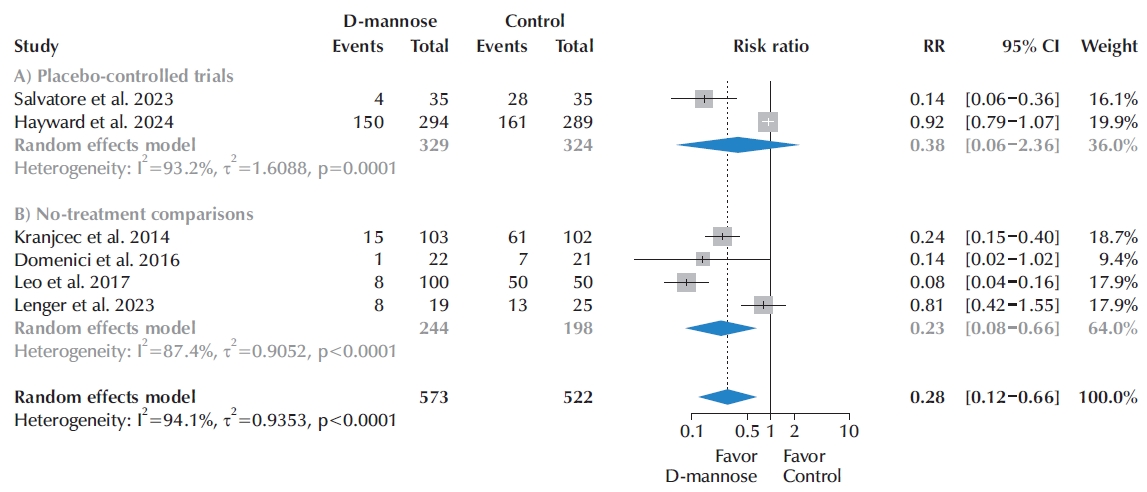
To evaluate the efficacy of D-mannose for preventing recurrent urinary tract infections (UTIs), including in kidney transplant recipients, and to clarify discrepancies between early openlabel and placebo-controlled trials. Materials and Methods: PubMed, Embase, CENTRAL (Cochrane Central Register of Controlled Trials), and Web of Science were searched from inception to February 2026. Randomized controlled trials (RCTs) comparing D-mannose with placebo, no treatment, antibiotics, or active controls were included. Risk of bias (RoB) was assessed using RoB 2, and certainty of evidence using GRADE (Grading of Recommendations, Assessment, Development, and Evaluations).
Results
Eleven RCT reports involving 1,724 participants were included; 10 independent study populations involving 1,631 participants contributed to quantitative analyses. In placebo-controlled trials, D-mannose did not significantly reduce UTI recurrence or persistence versus placebo (risk ratio [RR], 0.38; 95% confidence interval [CI], 0.06–2.36). No-treatment comparisons showed reduced recurrence (RR, 0.23; 95% CI, 0.08–0.66), but were more vulnerable to expectation, performance, and detection biases. The exploratory combined estimate favored D-mannose (RR, 0.28; 95% CI, 0.12–0.66), but certainty was very low. Antibiotic comparisons were inconclusive (RR, 0.43; 95% CI, 0.18–1.05), whereas proanthocyanidins active-control comparisons favored D-mannose-containing regimens (RR, 0.57; 95% CI, 0.40–0.82), including data from kidney transplant recipients.
Conclusions
Current placebo-controlled evidence does not establish superiority of D-mannose over placebo. Apparent benefits were mainly driven by no-treatment comparisons with very low certainty. D-mannose remains biologically plausible but clinically uncertain; adequately powered, double-blind, placebo-controlled trials are needed before firm recommendations can be made.
- 1,429 View
- 17 Download
- Intraoperative Factors Associated With Postoperative Febrile Infectious Complications Following Retrograde Intrarenal Surgery: A Propensity Score-Matched Study
- Wonjong Yang, Sangyong Park, Hee Sub Lee, Youngrak Jeong, Wonchul Lee, Hyung-Jee Kim, Seong Ho Lee, Justin Lee, Jong Keun Kim
- Urogenit Tract Infect 2026;21(2):125-135. Published online August 31, 2026
- DOI: https://doi.org/10.14777/uti.2652028.014
-
Abstract
PDFPubReaderePub
- Purpose
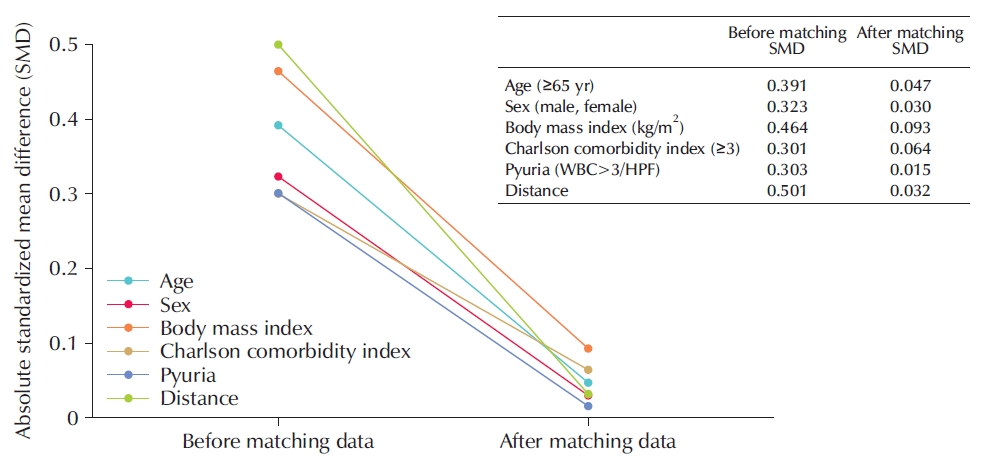
To investigate the intraoperative factors associated with postoperative febrile infectious complications following retrograde intrarenal surgery (RIRS). Materials and Methods: A total of 352 patients who underwent RIRS for renal stones between March 2017 and December 2022 were included in the analysis. Preoperative factors included age, sex, body mass index, underlying diseases, preoperative urine analysis results, and stone characteristics on computed tomography scans. Patients were divided into 2 groups based on the presence (group B) or absence (group A) of postoperative febrile infectious complications. Intraoperative factors—such as the degree of hydronephrosis on retrograde pyelography (RGP), stone impaction on endoscopic findings, size of the ureteral access sheath (UAS), grade of ureteral wall injury, operation time, and stone composition—were compared retrospectively.
Results
Postoperative febrile infectious complications occurred in 44 patients (12.6%). Following 1:3 propensity score matching, preoperative factors were analyzed for 44 patients (group B) and 132 patients (group A). Group B had a significantly longer hospital stay than group A (p=0.007); however, no significant differences were observed in postoperative pain (p=0.862) or stone-free rate (p=0.197). Hydronephrosis (odds ratio [OR], 7.31; 95% confidence interval [CI], 2.65–20.19) and high-grade ureteral wall injury (OR, 4.15; 95% CI, 1.88–9.12) were independently associated with postoperative febrile infectious complications, whereas no significant associations were observed for stone impaction, UAS size, operation time, or infectious stone composition.
Conclusions
Hydronephrosis identified on RGP and high-grade ureteral wall injury during RIRS were associated with postoperative febrile infectious complications and may serve as potential markers for risk stratification.
- 535 View
- 3 Download
Case Report
- Acute Obstructive Pyelonephritis With Bilateral Hutch Diverticula in an Adult: A Case Report
- Kyu Hyoung Cho, Gilho Lee, Youn Soo Jeon
- Urogenit Tract Infect 2026;21(2):136-139. Published online August 31, 2026
- DOI: https://doi.org/10.14777/uti.2652024.012
-
Abstract
PDFPubReaderePub
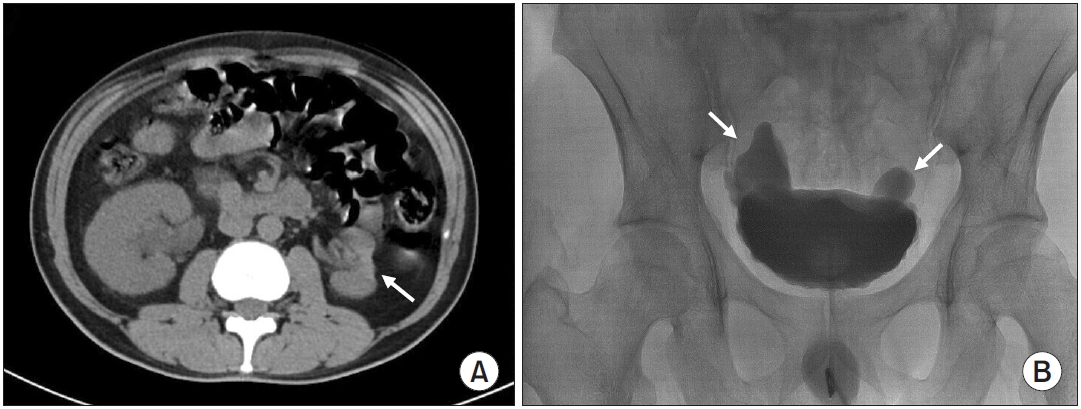
- Hutch diverticula are congenital bladder diverticula arising at the ureterovesical junction, typically associated with pediatric vesicoureteral reflux (VUR). Acute obstructive pyelonephritis occurring in an adult with bilateral Hutch diverticula is rare. The presence of a periureteral diverticulum may complicate ureteral stent placement and interpretation of postprocedural imaging findings. We report a 39-year-old man who was diagnosed with bilateral Hutch diverticula while being treated for acute obstructive pyelonephritis caused by a 4-mm proximal right ureteral stone. Following urgent right ureteral stenting and antimicrobial therapy, the patient's symptoms resolved, and he was discharged after 10 days of hospitalization. A subsequent voiding cystourethrogram confirmed bilateral Hutch diverticula but did not demonstrate definitive VUR. The imaging and cystoscopic findings clearly demonstrated the anatomical relationship between the right ureteral orifice and the adjacent right diverticulum. In addition, the distal coil of the double-J stent was lodged within the diverticulum, mimicking upward migration of the stent on kidney-ureter-bladder radiography. This case highlights a technical and radiologic pitfall of ureteral stenting in a patient with bilateral Hutch diverticula and emphasizes the importance of careful anatomical assessment during endourological intervention.
- 411 View
- 8 Download
 First
First Prev
Prev


