-
Identification of Plasma Biomarker Signatures for Acute and Chronic Cystitis Using Olink Explore Proteomics in UK Biobank
-
Chang Gu Kang, Su Kang Kim
-
Urogenit Tract Infect 2026;21(1):26-39. Published online April 30, 2026
-
DOI: https://doi.org/10.14777/uti.2550046023
-
-
 Abstract Abstract
 PDF PDF PubReader PubReader
- Purpose
Acute and chronic cystitis represent common yet biologically distinct inflammatory disorders of the lower urinary tract. However, circulating biomarkers capable of differentiating these conditions remain poorly defined.
Materials and Methods: Using COMPASS-processed Olink Explore proteomic data from UK Biobank participants, we compared plasma protein profiles across individuals with acute cystitis, chronic cystitis, and normal controls. After stringent quality-control procedures, covariate-adjusted regression models and differential abundance analyses were performed. STRING-based proteinprotein interaction (PPI) networks were constructed to examine systems-level organization of significantly altered proteins.
Results
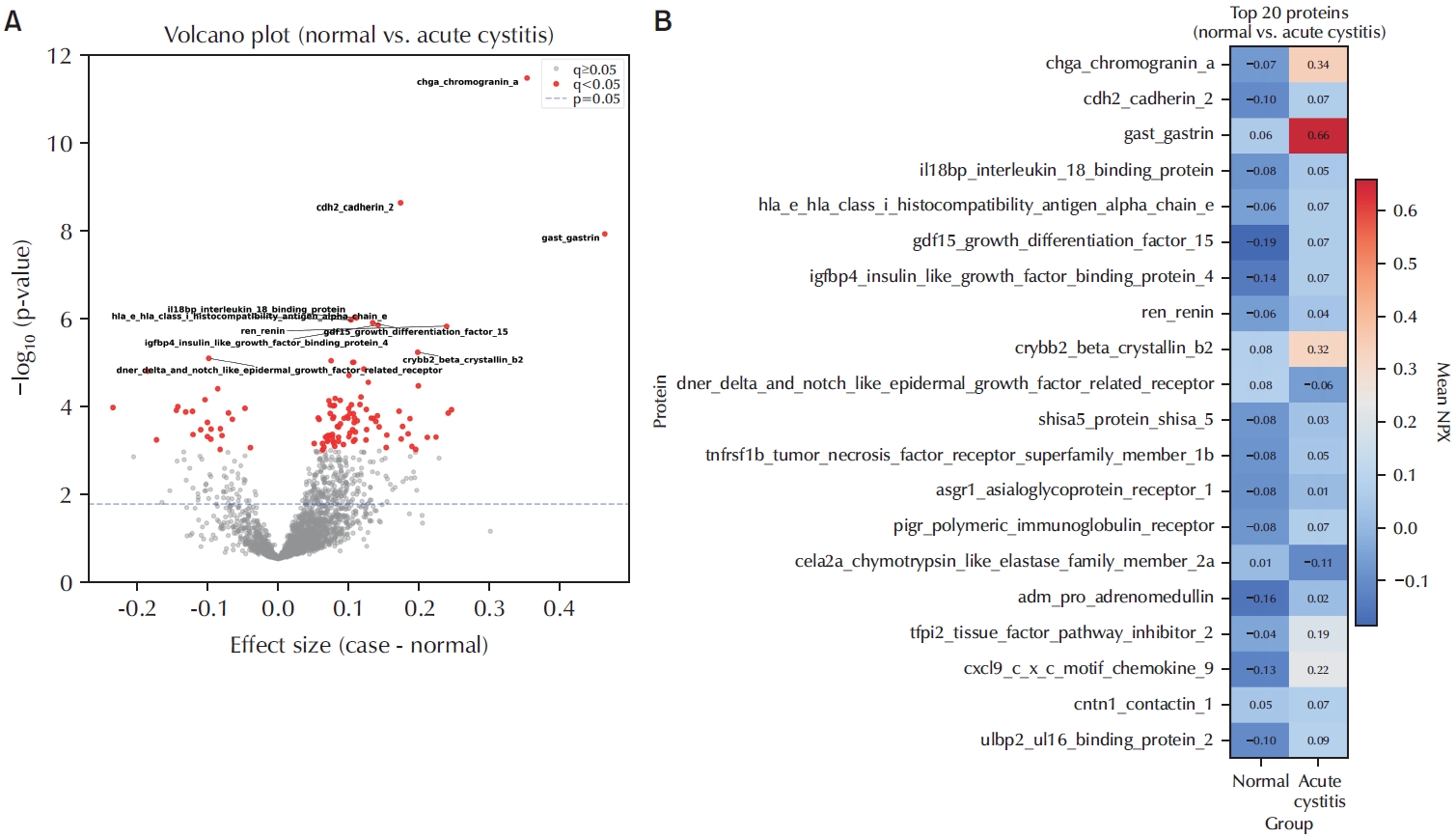
Among 2,715 participants, acute and chronic cystitis demonstrated distinct systemic proteomic signatures. CHGA (chromogranin A) and GAST (gastrin) were consistently elevated across both phenotypes, indicating shared neuroendocrine-associated systemic responses. Acute cystitis showed selective elevation of CDH2 (cadherin-2), whereas chronic cystitis demonstrated marked increases in GDF15 (growth differentiation factor 15). PPI network analysis revealed a densely interconnected architecture in acute cystitis and a more modular, branch topology in chronic cystitis, reflecting differing organizational patterns of circulating proteins.
Conclusions
This population-level analysis identifies phenotype-specific and shared plasma protein signatures associated with acute and chronic cystitis and provides an initial framework for understanding systemic inflammatory profiles in these conditions. Interpretation should remain cautious given the cross-sectional design, reliance on historical diagnostic classification, and the absence of bladder-specific molecular data. Nonetheless, these findings highlight candidate biomarkers that merit further validation in longitudinal and mechanistic studies.
|