Prevalence and Epidemiologic Characteristics of Acute Cystitis, Acute Pyelonephritis and Urinary Tract Infection: Population-Based Analysis Using Health Insurance Review and Assessment Service Bigdata From 2010 to 2024
Article information

Abstract
Purpose
This study aims to investigate the long-term prevalence trends and epidemiological characteristics of acute pyelonephritis (APN), acute cystitis (AC), and other urinary tract infections (UTIs) in South Korea using nationwide big data.
Materials and Methods
Data for ICD-10 (International Classification of Diseases, Tenth Revision) codes N10.0 (APN), N30.0 (AC), and N39.0 (UTI) were extracted from the Health Insurance Review and Assessment Service database from 2010 to 2024. Annual prevalence per 100,000 persons, sex and age-specific distribution, regional variations, and hospitalization/outpatient patterns were analyzed.
Results
The average annual prevalence per 100,000 was 344.4 for APN, 2,250.2 for AC, and 619.1 for UTI. AC reached its highest prevalence in 2024, despite a temporary decline in 2020. All conditions were more prevalent in females, with AC showing the highest male-to-female ratio of 1:20.4. A sharp 3.06-fold increase in APN prevalence was observed in females transitioning from ages 15–19 to 20–24 age group. Conversely, males showed a significant prevalence jump (1.43-fold) after age 80. In regional analysis, Gangwon State (469.5) and Jeju Special Self-Governing Province (177.9) recorded the highest and lowest APN prevalence, respectively. UTI required the longest hospitalization, while APN stays averaged 9.2 days for males and 9.0 days for females. An increase in related healthcare costs was also identified.
Conclusions
Age and sex are critical determinants of UTI epidemiology. The distinct spike in young females suggests a link to sexual activity, while the surge in elderly males likely correlates with prostatic conditions. These findings provide essential data for establishing targeted public health policies and clinical guidelines.
INTRODUCTION
Urinary tract infections (UTIs) represent one of the most prevalent bacterial infections in the community setting [1,2]. Specifically, acute cystitis (AC) is characterized by a high incidence rate, with over 50% of women experiencing at least one episode during their lifetime [3], underscoring its significant implications for public health. AC is a lower UTI that typically presents with symptoms such as dysuria, frequency, urgency, a sensation of residual urine, and gross hematuria. In contrast, acute pyelonephritis (APN) is an upper UTI characterized by symptoms including high fever, flank pain, and chills. Escherichia coli is the most common causative pathogen, and infection primarily occurs via an ascending route. In the context of a rapidly aging society and the increasing prevalence of comorbidities such as diabetes, the epidemiological landscape of UTIs has been evolving, leading to a substantial increase in hospitalization rates and healthcare expenditures.
In addition to age and sex, various etiologies contribute to the development of UTIs. Well-known risk factors include extremes of age (infants and the elderly), anatomic or functional abnormalities of the urinary tract, indwelling catheters, urolithiasis, immunocompromised state, significant postvoid residual volume, neurological disorders, history of antibiotic use, resistant organisms, urinary tract obstruction, female sex, male prostatic involvement, and recent instrumentation. Given the characteristics of infectious diseases, it is crucial to establish new health policies and appropriate response strategies, with particular emphasis on antibiotic resistance surveillance and demographic factors. Furthermore, UTIs inherently involve vulnerable populations, such as pediatric and geriatric patients. Therefore, considering the domestic demographic shift toward a super-aged society and limited healthcare resources, periodic assessment of these vulnerable groups and of sex-specific characteristics holds significant clinical and policy-making implications.
The escalating antibiotic resistance in UTIs poses a serious threat. In South Korea, resistance to various antimicrobial agents—including the emergence of multidrug- resistant strains—has become a pressing issue [4]. While continuous surveillance of antibiotic usage and resistance is conducted, there is a paucity of long-term, population-based longitudinal data specifically focusing on UTIs in the community and long-term care settings [5]. Although this study does not empirically address antimicrobial resistance data, establishing updated epidemiological trends is a critical prerequisite for effective antibiotic stewardship and the development of targeted surveillance strategies. Therefore, this investigation aims to provide a comprehensive, population-based analysis of the prevalence and clinical characteristics of UTIs to serve as a fundamental reference for future research, including studies on resistance patterns.
There have been some attempts to estimate the prevalence in Korea in the past [6-8]. However, most existing epidemiological studies are outdated, dating back more than a decade. While previous studies have addressed the epidemiology of UTIs, most were limited to single-center analyses or short-term observations, this 15-year longitudinal analysis provides a robust foundation for aligning national health policies and clinical guidelines with evolving epidemiological trends. Continuous surveillance of disease prevalence is essential. Therefore, updated investigations are required to align health policies, treatment strategies, and clinical guidelines with the most recent prevalence trends.
This study aims to provide a comprehensive, population-based analysis of the prevalence and clinical characteristics of AC and APN in South Korea, leveraging the Health Insurance Review and Assessment Service (HIRA) database over a 15-year period from 2010 to 2024.
MATERIALS AND METHODS
1. Data Characteristics of Healthcare Big Data Hub
This study was analyzed using data from the National Health Insurance Big Data Hub from 2010 to 2024. It is data obtained by analyzing and refining information collected from various channels, such as medical institutions, pharmaceutical companies, and related institutions, as well as nationwide medical information. It is data based on claims data from over 87,000 medical institutions, including data on injuries and illnesses, surgery/treatment, and prescription/dispensing of medicines. As defined in the HIRA data specification, duplicate encounters for the same diagnosis within a calendar year are excluded from the annual patient count. Accordingly, each individual is counted once per diagnosis per year, yielding patient-based prevalence estimates in this study. To prevent overestimation, we analyzed annual prevalent cases, counting each patient only once per calendar year for a specific diagnosis, regardless of the number of clinical visits.
2. Analysis Object
The study population consists of data extracted from the HIRA database, covering patients who visited medical institutions and received relevant prescriptions between 2010 and 2024. To ensure privacy, all personally identifiable information was removed. The dataset contains only aggregate figures, such as patient counts and medical costs, making individual identification impossible. Data extraction and analysis were performed for major UTIs based on International Classification of Diseases, Tenth Revision (ICD-10) codes, specifically including acute pyelonephritis (N10.0), acute cystitis (N30.0), and urinary tract infection (N39.0). We identified cases using the primary diagnosis code to ensure diagnostic specificity. The study focused on acute pyelonephritis (N10.0), acute cystitis (N30.0), and other urinary tract infections (N39.0). We excluded patients with chronic conditions or underlying congenital malformations when necessary to focus on acute episodes.
3. Study Variables
In the disease-specific analysis, we identified the number of patients with the relevant diagnostic codes during the study period. To calculate the overall and age-specific prevalence, we utilized the annual total and age-stratified population data provided by Statistics Korea from 2010 to 2024 as the denominator. Annual population figures by sex and age group were obtained from the Korean Statistical Information Service (https://kosis.kr/index/index.do). To assess the inpatient-to-outpatient ratio, sex distribution, and patient counts by 5-year age intervals, we analyzed the data accordingly. Furthermore, to determine regional prevalence, we calculated rates stratified by 17 administrative districts. These included 8 metropolitan-level cities (Seoul, Busan, Incheon, Daegu, Gwangju, Daejeon, Ulsan, and Sejong Special Self-Governing City) and 9 provincial-level regions (Gyeonggi-do, Gangwon State, Chungcheongbuk-do, Chungcheongnam-do, Jeonbuk State, Jeollanam-do, Gyeongsangbuk-do, Gyeongsangnam-do, and Jeju Special Self-Governing Province). In addition, the annual medical costs associated with each disease were analyzed.
4. Statistical Analysis
Data manipulation and extraction were performed using SAS Enterprise Guide ver. 9.3 (SAS Institute Inc., USA). The prevalence of UTI was calculated as the number of patients diagnosed with UTI per 100,000 person-years based on the entire Korean population covered by the National Health Insurance Service. To adjust for changes in the population structure from 2010 to 2024, age-standardized prevalence rates were calculated using the direct standardization method, with the 2010 Population and Housing Census of Korea serving as the standard population. Age groups were categorized into 5-year intervals (0–4, 5–9, ..., ≥85 years).
RESULTS
1. Overall Result of Each Disease
Across the entire study period, the average annual number of patients was 175,470 for APN, 1,146,064 for AC, and 315,220 for UTI. The average prevalence per 100,000 population was 344.4 for APN, 2250.2 for AC, and 619.1 for UTI (Table 1). All 3 diagnoses showed a decrease in patient numbers and prevalence from 2019 to 2020 (Fig. 1). APN reached its peak prevalence in 2018 and showed a sharp decline after 2020. Although the prevalence of APN rose slightly through 2024, it remained more than 100 cases lower per 100,000 compared to 2019. In the case of AC, the prevalence in 2020 was approximately 300 cases lower than in 2019; however, it increased steadily thereafter, reaching its highest prevalence in 2024. UTI also saw a decrease of about 75 cases per 100,000 in 2020 compared to 2019 and has not yet recovered to 2019 levels.
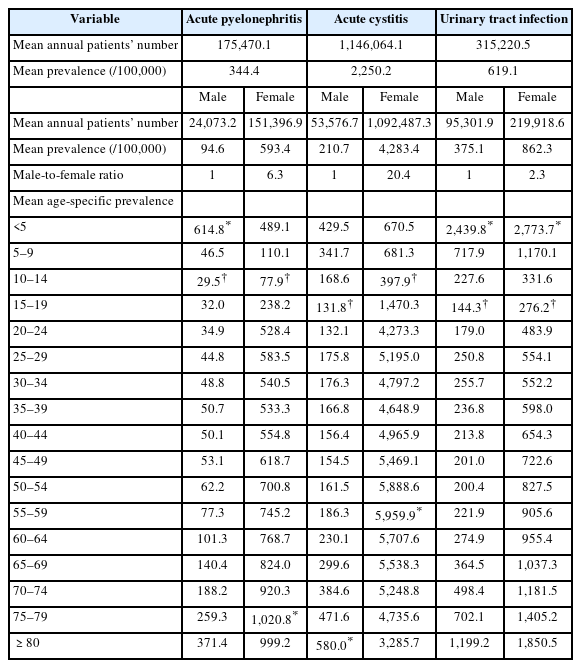
Annual mean prevalence and demographic distribution of acute urinary tract infections according to sex and age
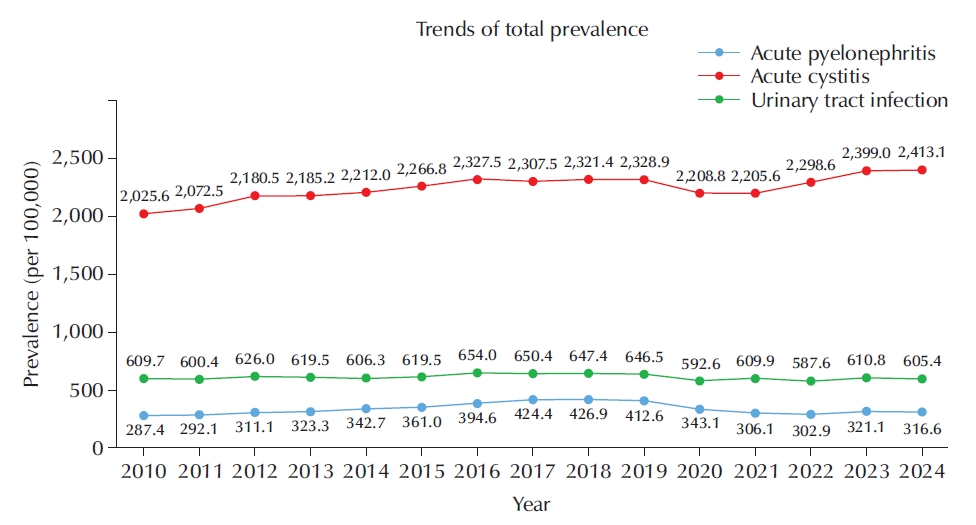
Annual trends in the overall prevalence of urinary tract infections (2010–2024).
2. Sex Differences
All 3 conditions showed a higher prevalence in females (Table 1). Female AC prevalence was the highest at approximately 4,283 per 100,000. The male-to-female ratios were 1:6.3 for APN, 1:20.4 for AC, and 1:2.3 for UTI, with AC showing the most significant sex disparity. The lowest average prevalence for all 3 diseases was observed in the teenage group (10–19 years). Regarding annual trends, APN showed a sharp decline between 2019 and 2020, continuing a downward trend until 2022 before slightly increasing in both sexes (Fig. 2A). AC showed a continuous increase from 2010 to 2019, followed by a sharp drop in 2020 and a rebound from 2021 onwards (Fig. 2B). UTI exhibited the least annual variation among the three, though it also followed the pattern of a sharp decline in 2020 followed by a slight increase after 2022 (Fig. 2C).
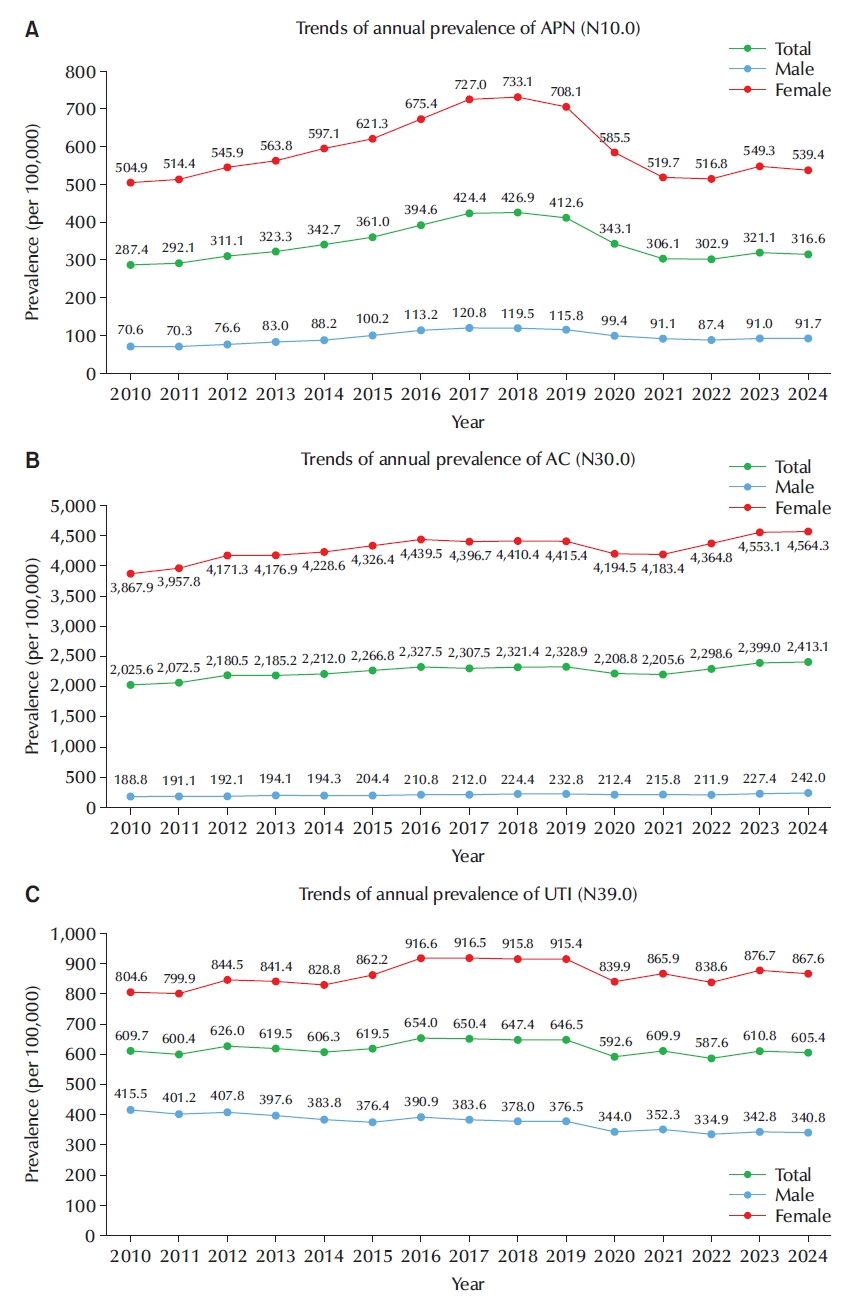
Annual trends in the prevalence of urinary tract infections by sex (2010–2024). (A) Acute pyelonephritis (APN). (B) Acute cystitis (AC). (C) Urinary tract infection (UTI).
3. Admission and Outpatient Department Visit
For APN, the average hospital stay was 9.2 days for males and 9.0 days for females (0.2 days shorter for females). Conversely, females had slightly more outpatient department (OPD) visit (2.2 days) than males (2.1 days) (Fig. 3A). For AC, males stayed approximately one day longer in the hospital, while females visited the OPD 0.4 times more frequently. Notably, the duration of hospitalization for females with AC showed a continuous decline (Fig. 3B). UTI recorded the longest hospitalization period among the 3 diseases; females stayed approximately 0.6 days longer than males, while OPD visits were nearly identical, with a negligible difference of 0.04 visits (Fig. 3C). A general decrease in both the number of outpatient visits and the duration of hospitalization was observed during the transition from 2019 to 2020 (Table 2). Specifically, while all other conditions showed a decline in both inpatient and outpatient utilization regardless of sex, a slight increase was noted in the duration of hospitalization for males with UTI.
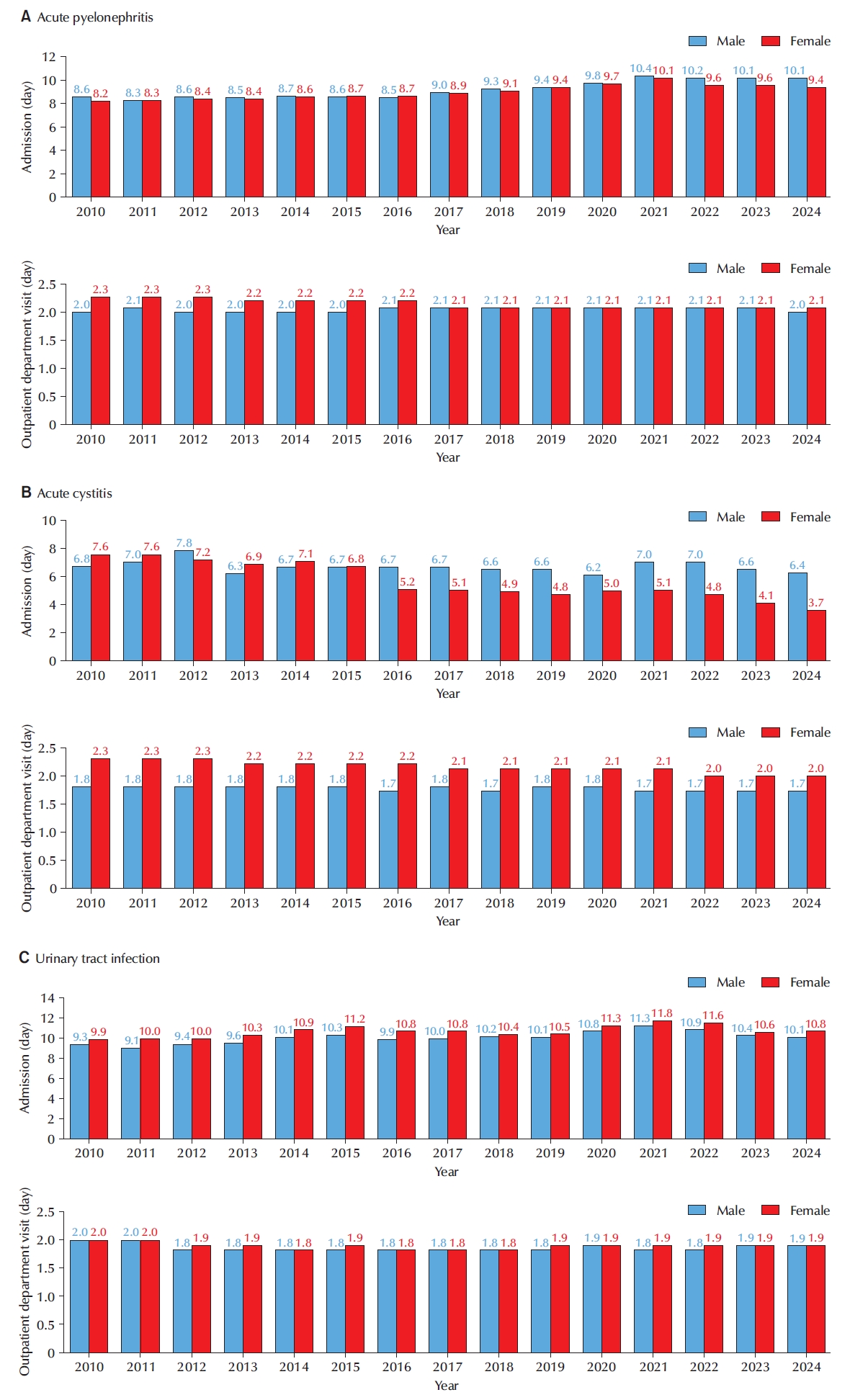
Analysis of healthcare utilization patterns for urinary tract infections: Length of stay and frequency of outpatient visits (2010–2024). (A) Acute pyelonephritis. (B) Acute cystitis. (C) Urinary tract infection.
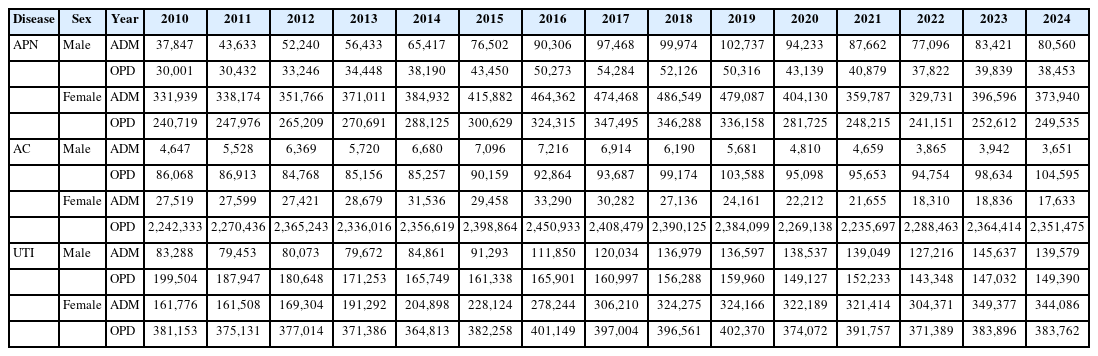
Annual total duration (day) of medical facility use for acute urinary tract infections
4. Age-Specific Prevalence
Both APN and UTI showed a sharp decline in prevalence when moving from the under-5 group to the 5–9 age group for both sexes.
1) Acute pyelonephritis
In males, prevalence increased with age. In females, prevalence began to rise from ages 10–14, with the sharpest increase (3.06-fold) occurring between the 15–19 and 20–24 age groups (Fig. 4A). After age 30–34, prevalence increased gradually before slightly dipping after age 80. For males, the lowest prevalence was in the 10–14 age group, followed by a steady increase, with the most significant jump (1.43-fold) occurring in the ≥80 years group. Notably, the prevalence in males was higher than in females only in the under-5 group.
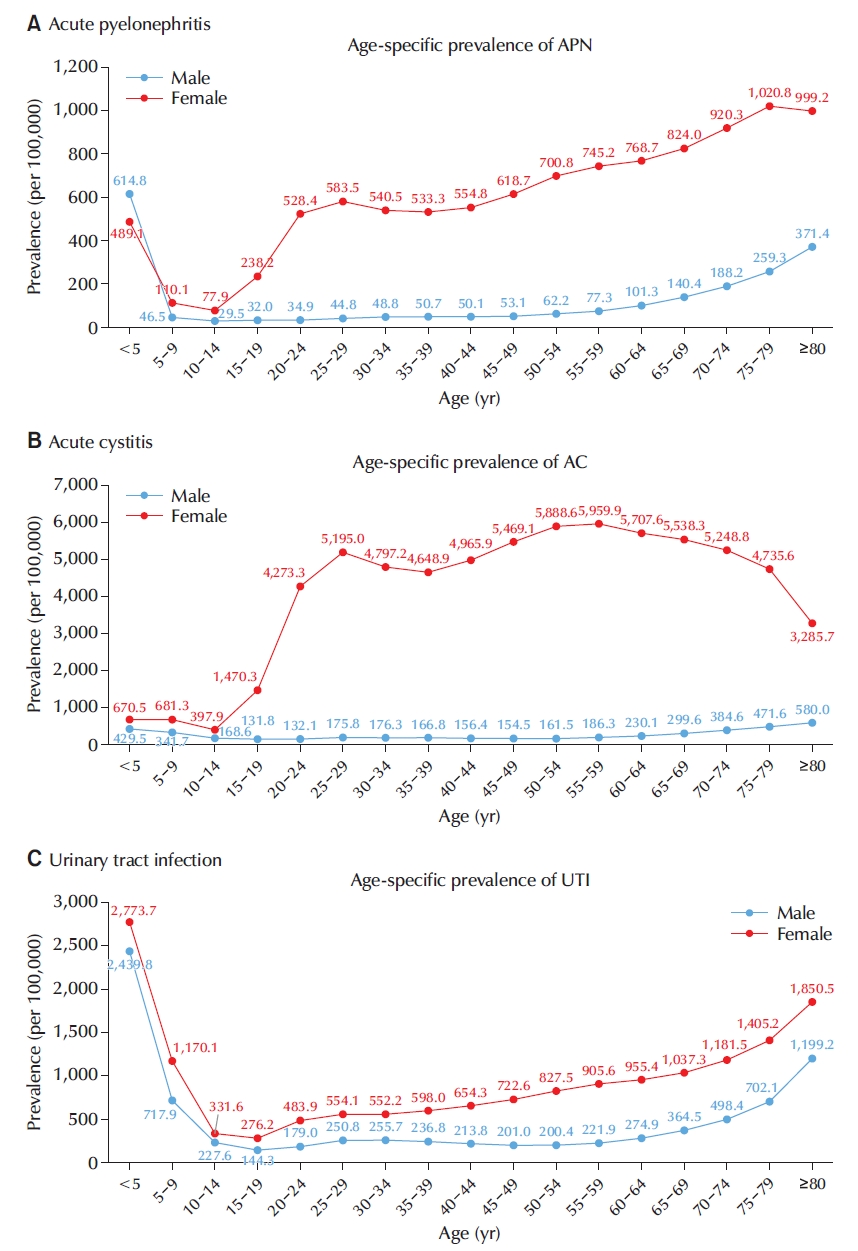
Mean age-specific prevalence (5-year age group) of APN/AC/UTI from 2010 to 2024. (A) Acute pyelonephritis (APN). (B) Acute cystitis (AC). (C) Urinary tract infection (UTI).
2) Acute cystitis
This condition showed the greatest sex disparity (Fig. 4B). Females had a higher prevalence across all age groups. In females, the lowest prevalence was in the 10–14 group, peaking in the 55–59 group before declining. The sharpest increase occurred between the 15–19 and 20–24 groups. For males, prevalence increased from age 50 onwards, with the most rapid growth (1.33-fold) seen between the 20–24 and 25–29 age groups.
3) Urinary tract infection
The highest prevalence was in the under-5 group, and the lowest was in the 15–19 group (Fig. 4C). Females maintained a higher prevalence across all ages. Both sexes showed an upward trend after age 20–24. The sharpest increase was seen in males transitioning from 75–79 to ≥80 years age group, and in females from 15–19 to 20–24 years age group.
5. By Region
The epidemiological analysis revealed significant geographical disparities in the prevalence of the 3 conditions across South Korea (Fig. 5).
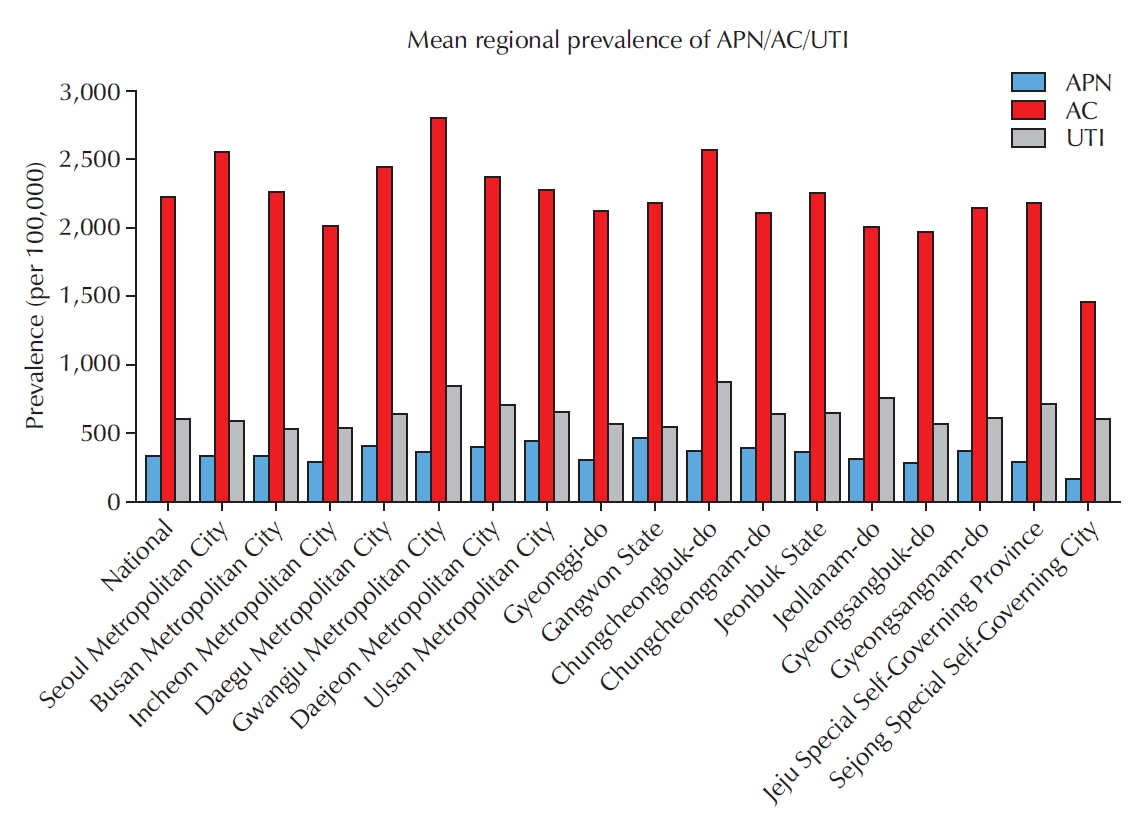
Regional analysis of mean prevalence APN/AC/UTI from 2010 to 2024 in South Korea. APN, acute pyelonephritis; AC, acute cystitis; UTI, urinary tract infection.
1) Acute pyelonephritis
The prevalence of APN was highest in Gangwon State, recording 469.5 cases per 100,000 population, which stands in stark contrast to Jeju Special Self-Governing Province, where the lowest prevalence was observed at 177.9 per 100,000.
2) Acute cystitis
For AC, Gwangju Metropolitan City exhibited the highest disease burden with a prevalence of 2,807.3 per 100,000. Similar to the trend seen in APN, Jeju Special Self-Governing Province again reported the lowest figure nationwide at 1,461.1 per 100,000.
3) Urinary tract infection
The regional distribution of UTI followed a different pattern, with the highest prevalence identified in Chungcheongbuk-do (879.4 per 100,000) and the lowest in Busan Metropolitan City (532.1 per 100,000).
6. Cost Analysis
All 3 diseases exhibited a general trend of increasing medical costs, expressed in Korean won (KRW), over the study period (Fig. 6). However, the specific patterns of expenditure varied by diagnosis. AC showed a consistent and steady increase in medical costs throughout the entire period. APN costs decreased between 2020 and 2022, mirroring the decline in prevalence during the pandemic, but rebounded with an upward trend starting in 2023. UTI costs increased continuously until 2021, experienced a temporary decline in 2022, and have been rising again since 2023.
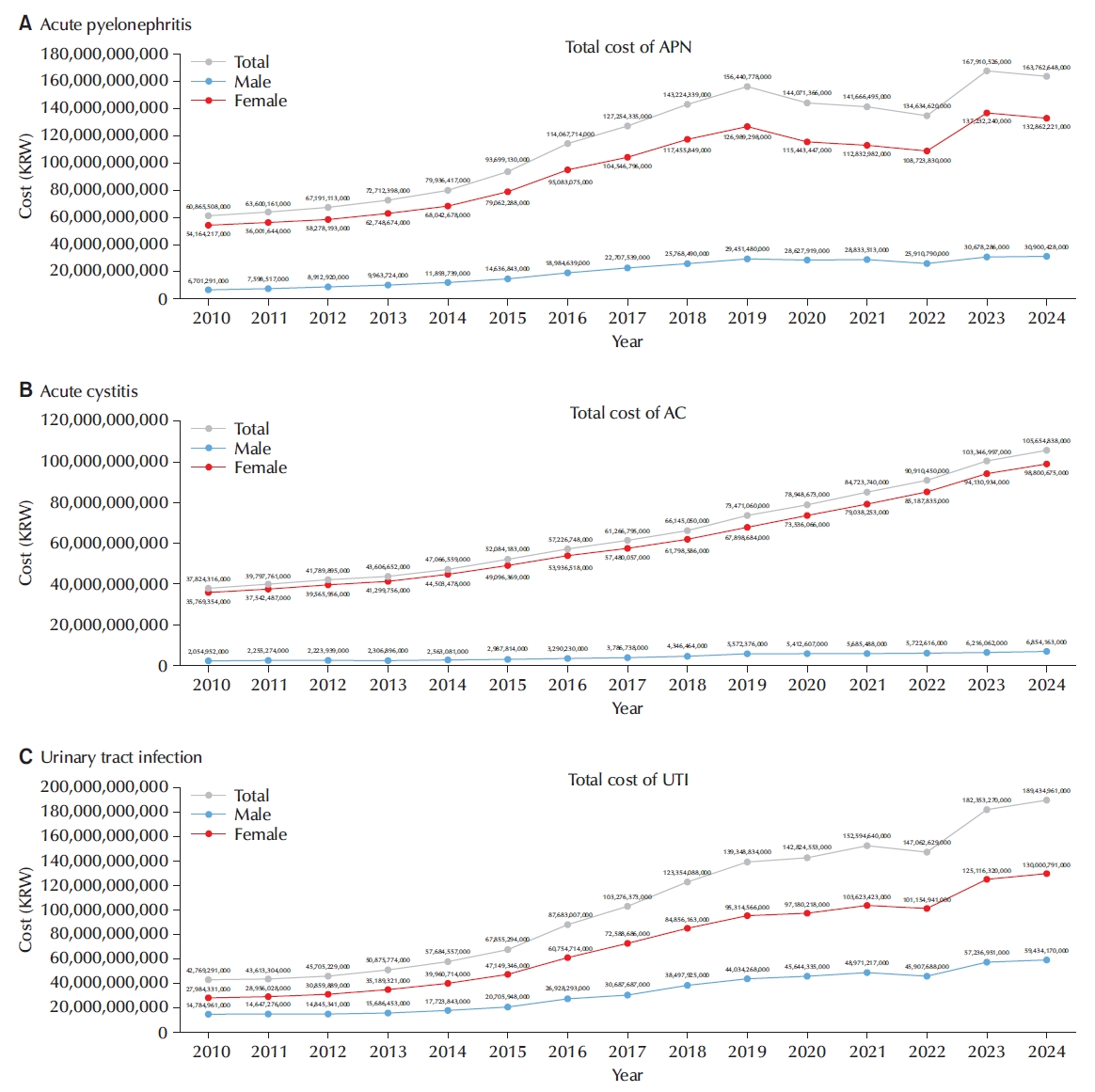
Disease-specific cost analysis (unit: Korean won [KRW]). (A) Acute pyelonephritis (APN). (B) Acute cystitis (AC). (C) Urinary tract infection (UTI).
Notably, despite the differences in prevalence rates, the highest total medical expenditure was recorded for UTI, followed by APN and AC, respectively. This suggests that the economic burden of UTI is substantially driven by factors such as longer hospitalization periods and the complexity of management in the elderly population. These findings indicate that although AC has a higher prevalence, UTI and APN impose a greater individual and national economic burden due to their clinical severity and resource-intensive inpatient care.
When comparing total medical costs between 2010 and 2024, expenditures increased by 2.7-fold for APN, 2.8-fold for AC, and 4.4-fold for UTI. In line with prevalence trends, total healthcare costs were higher for females than for males. However, regarding the rate of cost increase, males showed a more pronounced growth compared to females in the APN and AC groups. Specifically, for APN, costs for males increased by 4.6-fold compared to 2.5-fold for females. For AC, males exhibited a 3.3-fold increase versus a 2.8-fold increase in females. In contrast, for UTI, the cost increase was greater in females (4.6-fold) than in males (4-fold).
DISCUSSION
UTIs are among the most common infectious diseases, and the escalating threat of antimicrobial resistance remains a critical concern. This, in turn, results in substantial healthcare expenditures and the intensive consumption of medical resources [9]. Urosepsis resulting from UTIs leads to various clinical complications, including increased mortality rates and prolonged hospital stays [10]. While various classifications exist, UTIs are generally categorized into complicated and uncomplicated infections based on risk factors. Current clinical guidelines often classify UTIs into 6 categories: pyelonephritis, cystitis, recurrent UTI, catheter-associated UTI (CAUTI), UTI in men, and urosepsis [11]. Recently, a new classification system based on symptoms—distinguishing between localized and systemic infections—has also been introduced. However, a limitation of this study is that the ICD-10 coding system used does not allow for a clear distinction between complicated and uncomplicated infections, nor does it reflect the newer localized versus systemic classifications. Aligning clinical diagnostic standards with epidemiological data classification in the future would provide a more robust evidence base for both data analysis and patient care.
In addition to site-specific diagnoses such as APN and AC, we included 'UTI, site not specified' (N39.0) in our analysis. We included N39.0 because it is one of the most frequently used codes in primary care for suspected UTIs where a specific site is not yet confirmed. We also acknowledge that excluding other nonspecific codes, such as N30.9, might have led to a conservative estimate of the overall prevalence.
UTI prevalence is influenced by diverse factors, most notably age and sex [12]. In this study, acute UTIs showed a significantly higher prevalence in females. While patterns vary in infancy and old age, it is well established that women of postpubertal and childbearing age experience higher infection rates than men [13]. A striking finding in our data is the exponential surge in prevalence among females aged 20–24 compared to those aged 15–19, with APN prevalence increasing 3.06-fold. This spike aligns with the typical onset of frequent sexual activity in this age group. Sexual intercourse is a primary risk factor that can disrupt the periurethral flora and facilitate the ascending entry of bacteria into the bladder, often referred to as "honeymoon cystitis." APN was also found to be associated with sexual activity [14]. This underscores the need for proactive preventive education and early medical intervention strategies specifically targeting females in their early 20s. For cystitis, the peak prevalence was observed in the 55–59 age group, which may indirectly reflect the impact of menopause. Indeed, menopause is a major risk factor for UTIs, particularly cystitis, and hormone replacement therapy is often required to manage subsequent recurrent UTIs [15]. While the average menopausal age in South Korean women is reported to be approximately 49.3 years [16], our study identified the peak prevalence of cystitis in the 55–59 age group. This temporal discrepancy suggests that the urological complications of estrogen deficiency may manifest more prominently or reach a clinical threshold several years after the onset of menopause.
Conversely, we observed a prevalence reversal and increased severity in elderly males. While males generally maintain lower prevalence rates than females after infancy, a sharp 1.43-fold increase was observed as they reached the age of 80 and beyond. This trend is closely linked to benign prostatic hyperplasia (BPH), a hallmark condition of aging in men or voiding problem in elderly patients [17]. Prostatic obstruction leads to increased postvoid residual volume, which serves as a reservoir for bacterial growth and increases the risk of progression from simple cystitis to APN. Furthermore, the longer hospitalization periods observed in males for APN and AC in later years suggest higher disease severity and slower recovery rates, likely due to comorbidities such as BPH and diabetes. This trend has also been observed internationally [18]. In South Korea, the transition into a super-aged society, the overall aging of the population, and the increasing number of patients utilizing long-term care hospitals suggest a high risk that UTIs among the elderly will continue to rise in the future.
Regional analysis revealed that Jeju Special Self-Governing Province had the lowest prevalence for both APN and AC, which likely reflects its unique demographic structure. Sejong is one of the "youngest" cities in South Korea, with a lower proportion of the elderly population—a high-risk group for UTIs. Additionally, the high concentration of young professionals and civil servants in the region may correlate with higher health literacy and better access to preventive care. In contrast, Provinces such as Gangwon State and Chungcheongbuk-do, which showed higher prevalence rates, are characterized by higher aging indices and potentially more limited healthcare access, which may lead to delayed diagnosis and more advanced clinical presentations.
The impact of the coronavirus disease 2019 (COVID-19) pandemic on UTI prevalence was also evident. While it is difficult to determine whether this change was driven by improved hygiene or shifts in healthcare-seeking behavior, a significant decline was noted between 2019 and 2020. International studies have reported shifts in the patterns of pediatric UTIs before and after the COVID-19 pandemic [19]. In contrast, a domestic study utilizing KONIS (Korean Nosocomial Infections Surveillance System) data indicated no significant change in CAUTI within intensive care units, even though a decrease was observed in other healthcare-associated infections such as ventilator-associated pneumonia and central line-associated bloodstream infection [20]. Given that our findings are based on nationwide data encompassing both community-acquired and hospital-acquired infections, it is reasonable to conclude that COVID-19 has indeed influenced the epidemiology of UTIs. Furthermore, a decrease was observed in both the actual number of outpatient visits and the duration of hospitalization across all conditions, regardless of sex, with the exception of UTI-related hospitalizations in males. Although a direct causal relationship cannot be definitively established within the scope of this study, these findings suggest that the overall reduction in healthcare utilization during the COVID-19 pandemic likely influenced the observed decline in prevalence. This supports the hypothesis that the downward trend in 2020 may partially reflect 'under-reporting' due to changes in medical-seeking behavior during the pandemic era. This study marks the first to confirm the impact of COVID-19 on the prevalence of UTIs and healthcare utilization patterns in South Korea. The short-term decrease may be attributed to enhanced personal hygiene, such as frequent handwashing, which indirectly improves perineal hygiene. There are also studies indicating that preventive measures during the COVID-19 pandemic, such as quarantine and enhanced hand hygiene, significantly influenced the incidence of other infectious diseases [21,22]. Simultaneously, the pandemic likely caused underdetection as patients with mild symptoms avoided medical facilities. However, by 2024, AC prevalence reached an all-time high. This long-term rebound suggests a normalization of social and sexual activities following the lifting of quarantine measures, combined with a release of suppressed healthcare demand from the pandemic period.
Our healthcare cost analysis (in KRW) confirmed a rising trend in medical expenditures associated with UTIs over the years. Notably, when comparing medical costs between 2010 and 2024, distinct gender-based differences were observed; specifically, the rate of increase in medical expenditures for males with APN or AC was higher than that for females. These findings suggest that although the prevalence of UTIs remains lower in males, the steep longitudinal increase in associated costs indicates a significant future socioeconomic impact that warrants careful consideration.
This study has certain limitations. First, as it is based on HIRA claims data, the clinical diagnosis could not be cross-verified with actual laboratory culture results. Second, we could not apply the complicated versus uncomplicated classification used in current clinical guidelines due to the limitations of ICD-10 coding. Since these categories differ significantly in terms of antimicrobial resistance and clinical outcomes, the inability to distinguish between them remains a constraint of large-scale big data research. Third, it was challenging to distinguish whether the cases of acute UTI were recurrent. Due to the nature of the dataset, diagnoses were captured as individual events, making it difficult to determine the chronicity or recurrence of the infections. We plan to address this through further analysis in future studies. Fourth, the associations with other comorbidities could not be established. Key risk factors, including metabolic disorders such as diabetes and neurological conditions, were not identified in the current data. Finally, this study identified patients based strictly on primary diagnosis codes to ensure high diagnostic specificity. However, this methodological approach may have resulted in an underestimation of the actual prevalence, as cases where UTIs were recorded only as secondary diagnoses were excluded from the analysis. Future studies incorporating both primary and secondary diagnostic fields may provide a more comprehensive estimate of the total disease burden.
In conclusion, UTIs occur 7–20 times more frequently in women than in men, and the prevalence by age also shows different prevalence rates in men and women. In general, the prevalence was high in infancy, and then it increased with age, and it was confirmed that age was a major risk factor. We believe that further research is needed for a more accurate analysis.
Notes
Funding/Support
This research was supported by the Korean Association of Urogenital Tract Infection and Inflammation. The funder had no role in the study design, data collection, analysis, or the decision to publish.
Research Ethics
This study was approved by the institutional review board of Uijeongbu St. Mary's Hospital, The Catholic University of Korea (approval no. UC23ZISI0090).
Conflict of Interest
The authors have nothing to disclose.
Author Contribution
Conceptualization: SB; Data curation: DHL, CHH; Formal analysis: DHL, JCL; Funding acquisition: SB; Methodology: DHL, CHH, SB; Project administration: SB; Visualization: DHL, JCL; Writing - original draft: DHL; Writing - review & editing: DHL, SB.